The first time I landed in Lombok and crossed over to Gili Trawangan, I honestly only thought about two things: where to find good coffee and how fast I could jump into the water. The sea between Lombok, Gili Air, Gili Meno, and Gili Trawangan looks like something straight out of a travel magazine – crystal clear, full of turtles, and at sunset everything turns gold. When you’re in that moment, it’s easy to forget that you’re actually on a tiny island in the middle of nowhere.
I’ve spent a few trips hopping between the Gilis – lazy breakfasts on Gili Air, quiet mornings on Gili Meno, long nights on Gili Trawangan. And after a while you start to travel a bit differently. You still want the fun stuff of course – diving, snorkeling, bike rides around the island – but in the back of your mind you also think, “Okay, if something happens to me out here, who can actually help?” That’s when I started paying more attention to things like emergency medical assistance in Gili Trawangan instead of just which beach bar has the best live music.
Why medical evacuation matters on a small island
If you look at a map, Gili Trawangan is just a dot off the coast of Lombok. That’s part of what makes it magical: no cars, no big roads, just sandy paths, bicycles, and horse carts. But the same thing that makes the island feel so peaceful also means you don’t have a huge hospital around the corner.
There are clinics and basic treatment options on the island, which is usually enough for small issues. But for anything that needs more serious care, you’ll want a proper plan to reach a bigger facility on Lombok. That’s where a reliable medical evacuation service from the Gili Islands really matters. It’s not about being paranoid; it’s about knowing that if something unexpected happens, there’s a clear way to get from a beach on Gili T to a well-equipped hospital on the mainland.
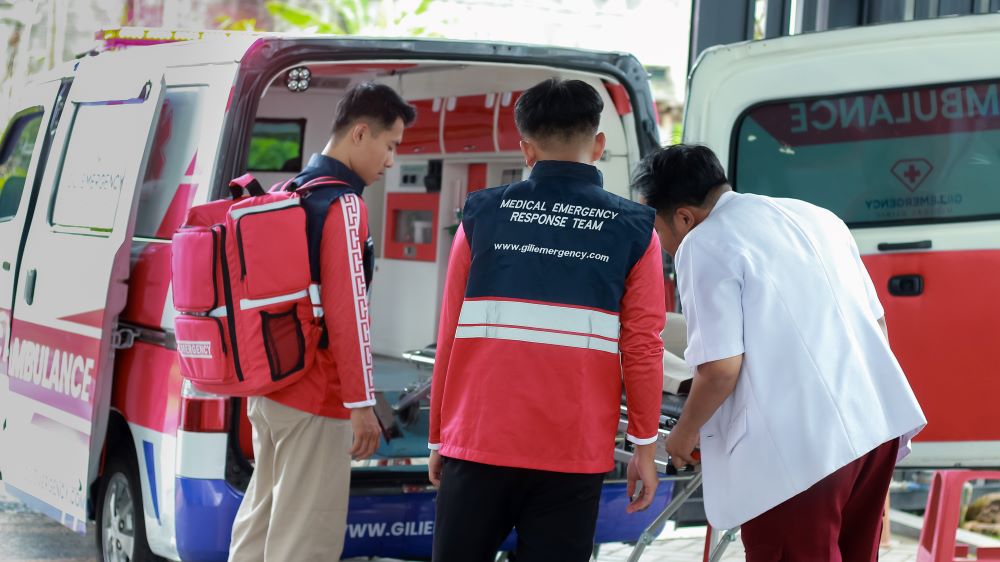
What many visitors don’t realize is that coordination is the key. It’s not just a boat ride. There’s a whole chain involved: a 24/7 island emergency response team, transport from your hotel or villa, a fast boat or speedboat, ambulance on the Lombok side, and sometimes even support once you’re at the hospital. When all of that is handled by one experienced team, you can relax a lot more during your stay.
Getting to know Gili Emergency
On one of my trips, I kept seeing the same name pop up whenever people talked about emergencies on the island: Gili Emergency. I saw it on a dive shop wall, heard it mentioned by a local guide, and even found it saved in a friend’s phone “just in case”. When the same name keeps appearing, you start to pay attention.
What stood out to me is that their focus is very clear: helping tourists and locals with organized, professional island medical support when something goes wrong. They understand how the islands work, they know the spots where people usually have issues (diving points, busy bars, certain corners of the island), and they speak the languages visitors need – English and Indonesian, at the very least.
Their role is basically to connect all the dots quickly. From Gili Trawangan to Lombok, timing makes a big difference, so having a team that can arrange a fast boat medical transfer to Lombok hospitals, plus an ambulance waiting on the other side, is a big comfort. You don’t have to manage ten different phone numbers or figure out logistics while you’re stressed; they already have that playbook ready.
During one sunset on the beach I ended up chatting with a dive instructor who told me that when something serious happens, they call the same local team every time. That’s how I first heard that Gili Trawangan medical evacuation is coordinated by Gili Emergency, a crew that knows the island inside out and works closely with trusted medical partners. Since then, I’ve noticed their details pinned on more than one notice board around the Gilis, which tells you locals actually rely on them.
What usually happens if you need help
Hopefully you’ll never need this, but it’s nice to have a rough picture in your head so you don’t panic if something does happen. The flow is usually something like this:
First, you (or someone with you) makes the call. It might be from your hotel, a dive center, or directly from your phone on the beach. The team will ask a few quick but important questions – what happened, where you are, how you’re feeling, if you’re conscious, breathing normally, and so on. It’s all about understanding how urgent the situation is.
Next, they arrange to reach you. On a small island, that could mean a scooter, a local vehicle, or even meeting you at a specific landmark if you’re already moving. The goal is simple: stabilise you enough to travel safely. This is where professional emergency medical assistance in Gili Trawangan really shows its value; people who do this regularly tend to stay calm and think clearly when everyone else is stressed.
If you need to go to Lombok, the evacuation process kicks in. A boat is prepared, your information is passed on, and on the other side an ambulance is ready to meet you. In many cases, this kind of organized medical evacuation service from the Gili Islands saves a lot of time and confusion. Instead of trying to bargain for a random boat in the dark or explain everything again and again, you’re following a system that’s already been tested many times.
All the while, the team stays in touch, explaining what’s next and what you can expect. That alone can bring a surprising amount of calm, both for you and for anyone traveling with you.
Why this matters even if you’re “totally healthy”
I know the usual reaction: “I feel fine, I never get sick, why should I even think about this?” And honestly, that’s fair. Most people come to Lombok and the Gili Islands, have a beautiful time, and fly back home with nothing more than a bit of sunburn and too many sunset photos on their phone.
But the thing about travel is that it mixes new environments, different food, water activities, and sometimes just simple accidents – a step on coral, a scooter slide, a surf wipe-out, or a sudden stomach problem on Gili Air after trying too much spicy sambal. Having a trusted 24/7 island emergency response already in your contacts doesn’t make you a worried traveler; it makes you a relaxed one.
Once you know there’s a team ready to coordinate evacuation, communication, and logistics, you actually think about it less. You store the number, maybe send it to your travel partner, and then you go back to planning your next snorkeling spot or deciding whether tomorrow is for Gili Meno or another loop around Gili Trawangan by bike.
Simple steps to feel safer on your Gili trip
If you’re the kind of traveler who likes to be a bit prepared (without turning into a walking first-aid kit), here are a few small habits that make a big difference:
- Save the Gili Emergency contact in your phone before you even leave Lombok.
- Share that number with your friends or family traveling with you.
- Let your accommodation know if you have any existing health conditions, so they can react faster if needed.
- Keep your passport details and travel insurance information easily accessible – maybe a photo on your phone and a copy in your bag.
- Take a moment to note the nearest clinic to your hotel or villa, especially if you’re staying slightly off the main strip on Gili Trawangan.
None of this takes more than a few minutes, but together it means that if you ever need help, you’re not starting from zero.
Enjoying the islands with a lighter mind
At the end of the day, you’re not coming all the way to Lombok, Gili Trawangan, Gili Air, and Gili Meno just to think about hospitals and ambulances. You’re coming for slow mornings with ocean views, salty hair after snorkeling with turtles, that feeling when you ride a bike around the island at golden hour and there are no cars anywhere, just the sound of waves and music from beach cafés.
For me, knowing there’s a solid system for emergency medical assistance in Gili Trawangan is simply part of traveling smart. The same way I choose a safe boat company or double-check my accommodation reviews, I also like to know that if I ever need it, there’s a clear path from the island to proper medical care on Lombok.
So plan your diving, your island hopping, your romantic dinners and late-night beach walks. Take all the photos, try all the new food, stay out a little too late watching the stars. And somewhere in your notes, keep the name Gili Emergency and their role in gili trawangan medical evacuation at the back of your mind. It’s a small detail, but it can make your whole Gili adventure feel a lot more carefree.